Quick Takeaway
Primary Insight: The industry-standard 50% rule (rebuild if cost is under 50% of a new comparable unit) is a good starting point, but California facilities have to layer in Title 24 compliance and utility rebate math before the answer holds up.
Key Fact: California Title 24 Part 6 Section 120.6(e) applies mandatory controls, monitoring, and leak-testing requirements to any new compressed air installation of 25 hp or more, which a rebuild of an existing unit typically avoids.
Best Suited For: Plant managers and facilities engineers with a rotary screw compressor in Los Angeles County or Southern California nearing an airend decision point.
Rotary screw airends are precision-machined and can run 100,000 hours or more with disciplined maintenance. What they don't do is last forever. When bearing wear, seal failure, or rotor scoring finally shows up on a $40,000 machine, plant engineers have to decide whether to rebuild the airend or replace the whole unit.
The industry-standard 50% rule (rebuild if the cost is under 50% of a new comparable unit) is a good starting point but not the whole answer for a screw compressor rebuild in California. Title 24 Part 6 Section 120.6(e) applies mandatory design and monitoring requirements to any new compressed air installation of 25 hp or more, and Southern California utility programs pay rebates on high-efficiency replacements that a rebuild does not qualify for. Both factors push the actual decision line in different directions depending on the facility.
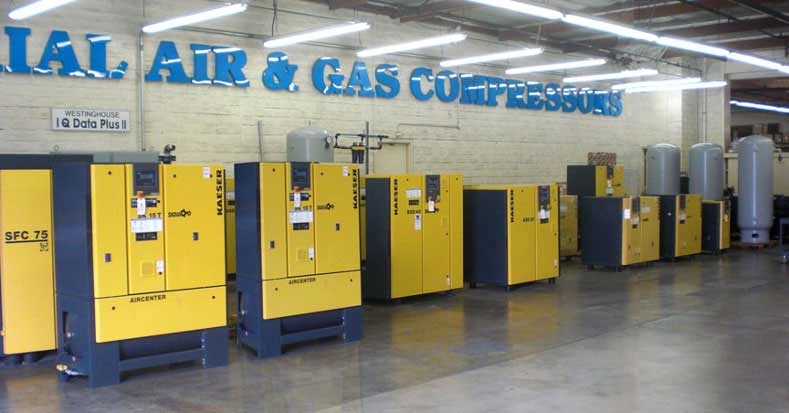
This guide walks through the math the way an authorized Kaeser dealer would work it, for facilities running 25 to 125 hp Kaeser rotary screw compressors or 100 to 700 hp large-frame units in Los Angeles County and Southern California.
What "Rebuild" Actually Means for a Rotary Screw Airend
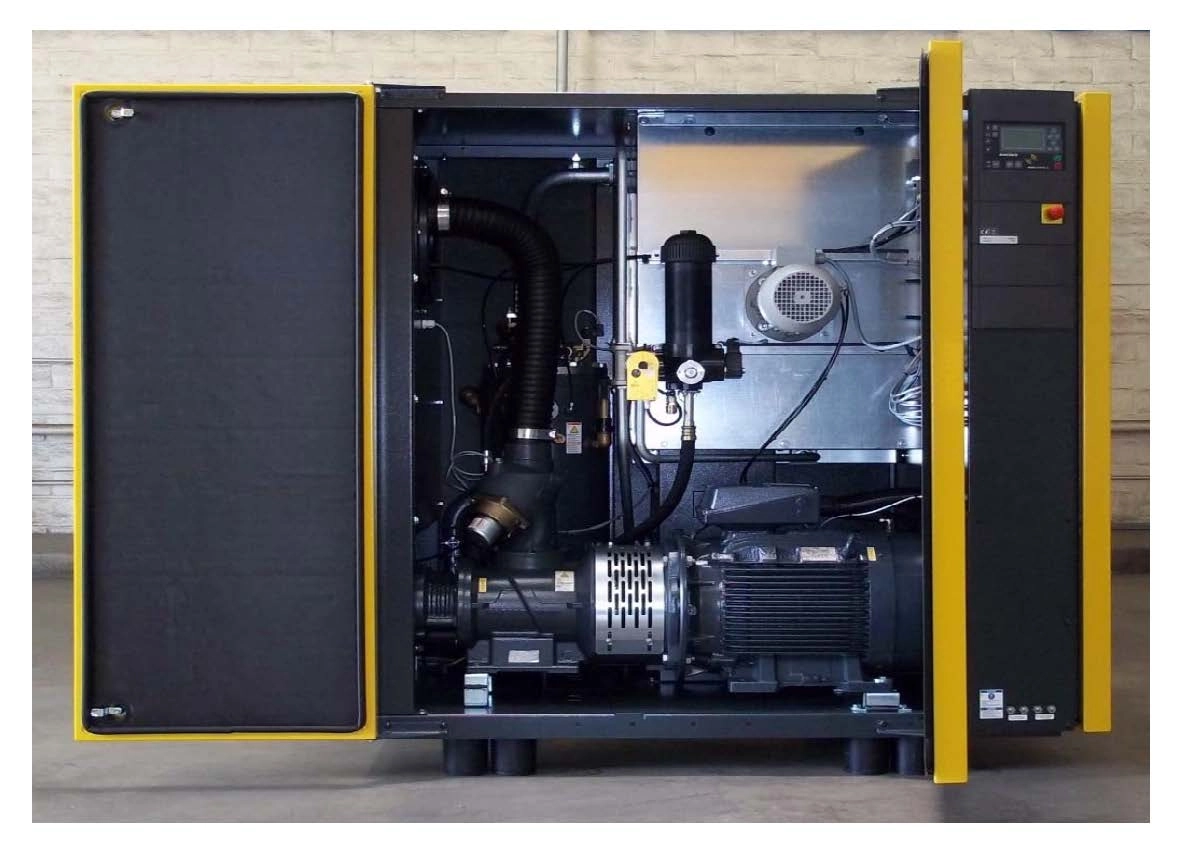
A rotary screw airend rebuild is not a top-to-bottom rebuild of the entire compressor. The rest of the machine (motor, cooler, controller, cabinet, dryer if integrated) stays where it is. What comes out for service is the airend itself: the rotor pair, timing gears, bearings, seals, and housing.
A standard airend rebuild typically replaces:
- All bearings on both the drive and blind ends
- All shaft seals and O-rings
- Timing gears if worn
- Gaskets
- Suction and discharge valve components on the airend
- Rotor shafts, metallized if scored or undersized
What a rebuild does not typically replace: the rotors themselves (unless damaged beyond metalizing), the airend housing, or anything outside the airend such as the motor, cooler, or controller.
A well-executed rebuild extends the airend by another 30,000 to 50,000 operating hours, often another full service life. That's why rebuilds are usually the right answer on rotary screws under 50,000 hours where the rotors are still within tolerance.
The 50% Rule and Where It Falls Short
The industry-standard heuristic across compressed air service is the 50% rule: if the cost of a rebuild exceeds 50% of the purchase price of a new comparable unit, replace. Under 50%, rebuild wins on capex. Some industries use a 65% threshold for critical or backup service where reliability outweighs upfront cost.
The rule captures the right instinct (pay for what extends service life proportional to what a new unit would cost) but misses three things that matter more in California than in most other markets.
Energy efficiency delta. A new-generation Kaeser SFC variable-speed or CSDX synchronous reluctance motor draws meaningfully less kWh per cfm than a 15-year-old fixed-speed unit. In California electricity markets, that difference alone can pay back the replacement premium in 3 to 5 years even when the rebuild is well under 50% of new.
Regulatory compliance. New installations of 25 hp or more trigger Title 24 requirements (covered in the next section). Rebuilds do not.
Utility rebate availability. Southern California Edison and other California utilities pay incentives on qualifying high-efficiency replacements. Rebuilds do not qualify.
Kaeser's own life-cycle management guidance frames the same point: purchase price and service costs account for just a fraction of the total lifetime cost of a compressor, with energy dominating the total. The 50% rule doesn't weigh that.
Rebuild Cost vs. Replacement Cost by HP Class
Actual costs vary by horsepower class, airend condition, and whether the airend is rebuilt in place or exchanged for a factory core. Directional ranges for common Kaeser platforms in Southern California, at 2026 pricing:
| HP class | Typical rebuild cost | Typical new unit cost (fixed-speed) | Rebuild as % of new |
|---|---|---|---|
| 25–40 hp (ASD) | $8,000–$14,000 | $22,000–$35,000 | ~35–45% |
| 40–60 hp (BSD) | $10,000–$18,000 | $30,000–$50,000 | ~35–40% |
| 75–150 hp (CSD) | $15,000–$28,000 | $55,000–$95,000 | ~25–35% |
| 150–250 hp (DSD) | $25,000–$45,000 | $110,000–$180,000 | ~20–30% |
Ranges are directional and should be verified against an actual quote. Real cost depends on airend condition (rotor scoring, shaft wear, housing corrosion), rebuild location (dealer service center vs. factory exchange), turnaround requirements, and OEM parts availability.
Rebuild turnaround is typically 10 to 14 working days from removal to reinstallation on a swap-out, plus dispatch time. New-unit lead time ranges from stock (available same week) to 8 to 16 weeks for larger or custom-configured units.
Where California Changes the Math: Title 24 and Utility Rebates
Two California-specific factors shift rebuild-vs-replace decisions from what the numbers would show in Texas or Georgia.
Title 24 Part 6 Section 120.6(e). California's 2022 Building Energy Efficiency Standards apply mandatory design, monitoring, and leak-testing requirements to all new compressed air systems and to any addition or alteration of a system where combined horsepower is 25 hp or more. Medical gas systems serving healthcare facilities are exempt.
The requirements include automatic sequencing controls on systems with three or more compressors and combined hp above 100, energy and airflow monitoring with 5-minute data logging on systems at or above 100 hp, and pressure testing of any newly installed piping longer than 50 adjoining feet.
A rebuild of an existing airend inside an existing installation does not typically trigger Title 24 compliance obligations for the rest of the system. A full compressor replacement often does. Rebuilding is often the cleaner path when adding controls, monitoring, or leak testing to bring the rest of the system into compliance is impractical. Full requirements are published in the California Energy Commission Title 24 compressed air systems fact sheet.
Southern California utility rebate programs. Southern California Edison offers rebates on qualifying high-efficiency compressed air projects through its commercial energy efficiency incentive programs. Variable-speed drive rotary screw compressors are eligible under most current program cycles. Rebate values change annually and are itemized on SCE's rebate schedules. A rebuild is not eligible for these rebates. If a new-unit purchase qualifies for a rebate worth 5% to 15% of purchase price, the effective replacement cost drops accordingly and the 50% rule shifts against rebuild.
When Rebuild Is the Right Call
Rebuilding is usually the correct choice when several of these are true.
- Airend hours are under 50,000 and rotors are still within tolerance.
- The rest of the compressor (motor, cooler, cabinet, controller) is in good condition and expected to last another 30,000 to 50,000 hours.
- Rebuild cost is well under 50% of a comparable new unit, which is typical in the 25 hp and larger classes.
- Title 24 compliance for the rest of the system is impractical or expensive to add.
- Replacement is physically difficult: the compressor sits in a mechanical room built around it, and access for a new unit would require significant construction.
- Model is still supported with OEM parts and rebuilder cores.
When Replacement Is the Right Call
Replacement is usually the correct choice when several of these are true.
- Rebuild cost approaches or exceeds 50% of a new comparable unit. This is common on very small classes (3 to 10 hp) and on units where multiple systems have failed together.
- Efficiency delta between the existing unit and current-generation replacement is meaningful. A 15-year-old fixed-speed unit compared to a current Kaeser CSDX or SFC-equipped equivalent can be a 15 to 25% kW/cfm improvement.
- SCE or SoCalGas rebates are available on the replacement equipment class in the current program cycle.
- Compressor is past its practical serviceable life (typically 80,000+ hours) and other systems (motor, cooler, controls) are also degraded.
- Model is 10+ years old and OEM parts availability is uncertain.
- Facility is already planning a Title 24 upgrade and adding a new compressor consolidates the compliance effort.
How to Get an Honest Quote From an Authorized Dealer
Ask for four numbers, not one.
- Rebuild cost, including labor and any anticipated shaft metalizing or rotor work.
- New unit cost of the closest comparable model (same hp class, fixed-speed).
- New unit cost of the closest current-generation efficient equivalent (CSDX, SFC variable-speed, or T- integrated dryer).
- Applicable SCE or SoCalGas rebate on the current-generation efficient equivalent, if any.
Then run the payback math on the efficiency delta over five years at your current electricity rate. Any authorized Kaeser dealer should produce all four numbers in a single quote. If the rebuild quote comes without the comparison, ask. For an overview of Kaeser models available at each hp class, see our Kaeser compressor model guide.
Frequently Asked Questions
How long does a rotary screw compressor airend rebuild take?
Rotary screw compressor airend rebuilds typically take 10 to 14 working days from airend removal to reinstallation, plus dispatch and reinstallation time. Turnaround depends on the size of the airend, whether shaft metalizing or rotor work is needed, and OEM parts lead times. Larger CSD, DSD, ESD, FSD, and HSD airends can run longer, especially if rotor work is needed. Facilities that cannot run without air during that window typically bridge the gap with a rental compressor.
What is the 50% rule for rotary screw compressor rebuild vs. replace?
The 50% rule for rotary screw compressor rebuild vs. replace is the industry-standard heuristic: if the cost of an airend rebuild exceeds 50% of a comparable new unit, replacement is usually the better value. Under 50%, rebuild wins on capex. The rule is a starting point that assumes similar efficiency and no regulatory or rebate factors. In California, both are worth explicit analysis before committing to either path.
Does Title 24 apply if I rebuild my compressor instead of replacing it?
California Title 24 Part 6 Section 120.6(e) applies to all new compressed air installations and to additions or alterations of systems where combined horsepower is 25 hp or more. A rebuild of an existing airend inside an existing installation does not typically trigger Title 24 compliance, while a full compressor replacement often does. Facilities that would need to add controls, monitoring, or leak testing under Title 24 often find rebuilding the cleaner regulatory path.
Can any compressor shop rebuild a Kaeser airend, or does it have to be an authorized dealer?
Any compressor shop can attempt a Kaeser airend rebuild, but non-authorized rebuilds void remaining OEM warranty on the airend and often on the connected drivetrain. Authorized Kaeser dealers have direct access to OEM rotor kits and parts, shaft metalizing partners, and factory rebuild specifications. If your unit is under 10 years old, the warranty implications typically outweigh the price difference between authorized and non-authorized rebuilds. See our compressor repair services for authorized rebuild work.
How much does a Kaeser airend rebuild cost in California?
Kaeser airend rebuild costs in California range roughly from $8,000 for a 25 hp ASD-class airend to $45,000 or more for a 250 hp DSD-class airend, with typical costs falling around 25% to 45% of a new comparable unit. Actual cost depends on horsepower class, airend condition, whether rotor metalizing is required, and turnaround requirements. For a specific quote, contact an authorized Kaeser dealer with your compressor's model and serial number.
Rebuild and Replacement Services in Southern California
Rebuild-vs-replace on a rotary screw compressor is not the same math in California as it is elsewhere. Title 24 pushes some facilities toward rebuild. Utility rebates and California electricity rates push others toward replacement. The 50% rule is a starting point that needs both factors layered in before it's a good answer.
American Compressor Company runs both sides of the decision. We are an authorized Kaeser dealer and rotary screw compressor service provider for Los Angeles County and Southern California, based in Santa Fe Springs. Our team quotes rebuild costs, current-generation replacement costs, and applicable rebate values in a single side-by-side, so the payback math is on the page before the decision gets made. For a rebuild-vs-replace quote on your specific unit, contact us with your model and serial number, or call 1-800-955-6188.