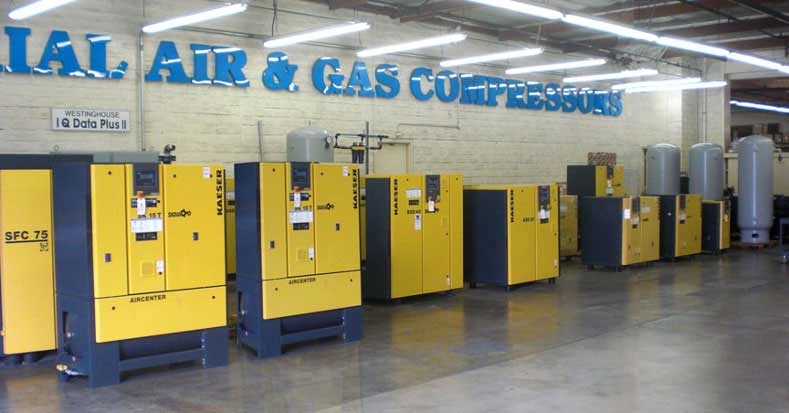
Quick Takeaway
Primary Insight: Kaeser rotary screw compressors are built around a 2,000-hour or annual preventive maintenance cycle, and most unplanned downtime traces back to that cycle getting stretched or skipped, not to a defective machine.
Key Fact: Heat is the leading cause of premature compressor failure, and electricity can account for up to 70% of a compressed air system's total lifetime cost, so a missed maintenance cycle usually shows up on the utility bill before it shows up as a breakdown.
Best Suited For: Facility and plant managers in Los Angeles County running Kaeser rotary screw compressors who want to know what "on schedule" maintenance actually includes.
A Kaeser compressor rarely fails without warning. Skipped or delayed Kaeser compressor maintenance is almost always the real cause, not a defective machine. Most breakdowns trace back to a preventive maintenance interval that got pushed back a few months, a filter that stayed in past its rated hours, or a fluid level nobody checked during a busy quarter. The compressor didn't break. The maintenance cycle did.
That gap matters more in Southern California than the manual lets on. Dusty industrial environments and mechanical rooms that run hot for months at a time both shorten the maintenance intervals Kaeser designs its equipment around, and a schedule built for a clean, climate-controlled plant somewhere else in the country doesn't automatically hold up here.
This guide covers what Kaeser compressor maintenance actually includes, why heat is the failure mode that matters most, and what it costs to let a preventive maintenance cycle slip.
What Kaeser Compressor Maintenance Actually Includes
Kaeser compressor maintenance is built around a formal preventive maintenance (PM) visit every 2,000 operating hours or once a year, whichever comes first, with harsher operating environments requiring service as often as every 1,000 hours.
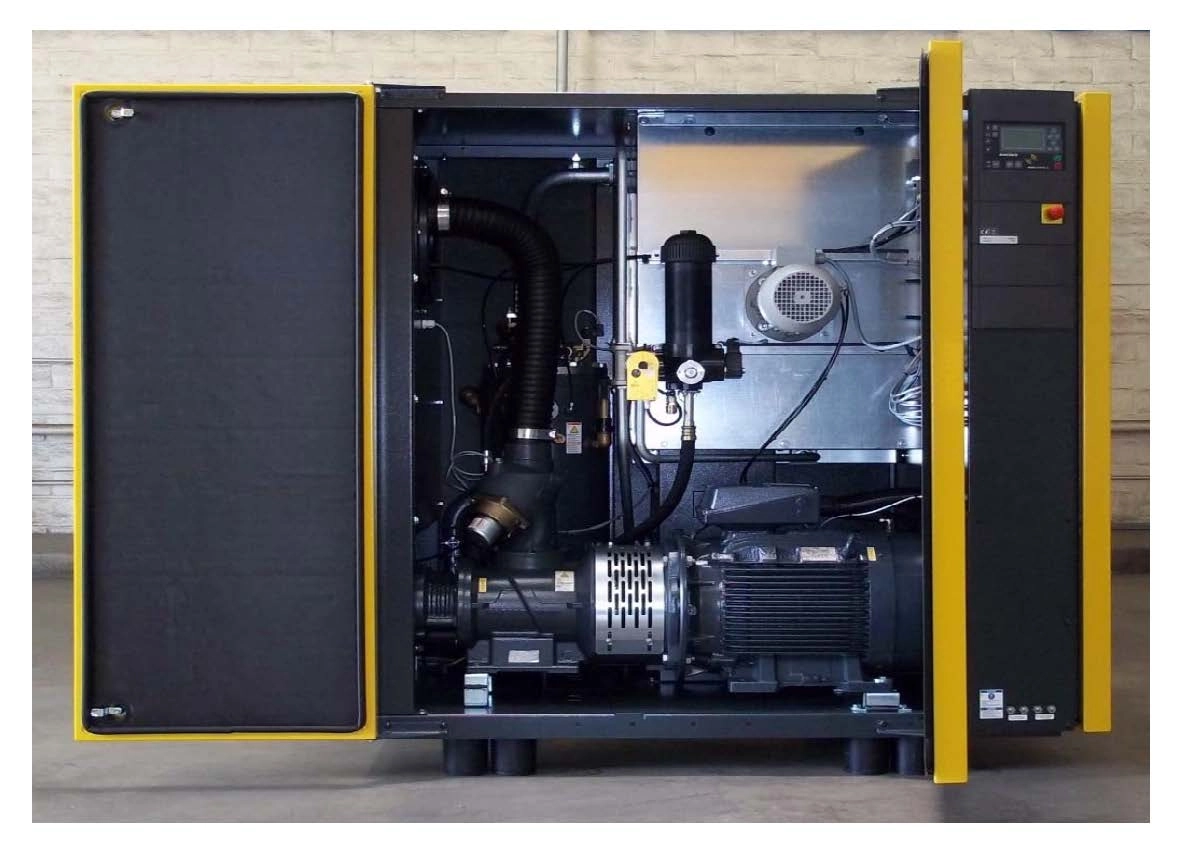
Kaeser's own rotary screw compressor maintenance checklist lists fluid replacement, filter and separator element changes, belt and coupling inspection, motor bearing checks, and safety valve testing as the core scope of a PM visit. Dusty environments, higher ambient temperatures, and heavier duty cycles all push a system toward the shorter end of that interval, which describes a fair number of industrial mechanical rooms across Los Angeles County.
PM visits aren't the only maintenance a Kaeser system needs between service calls. Kaeser's checklist also calls for checking compressor fluid level, monitoring room temperature, inspecting inlet filters and coolers for dust buildup, and testing condensate drain traps on an ongoing basis, with belt tension specifically checked monthly. None of these are hard to do. They're just the tasks that get skipped first when a facility gets busy, and skipping them is what turns a scheduled PM visit into an emergency call.
Why Heat Is the Real Threat to a Kaeser Rotary Screw Compressor
Heat is the leading cause of premature compressor failure, ahead of any single mechanical part wearing out on its own.
According to Kaeser's own industrial air compressor troubleshooting guide, overheating traces back to a small set of causes: restricted airflow to the cooler, a low compressor fluid level, or excessive ambient temperature combined with poor room ventilation. Every one of those causes is something a facility controls directly, which is also why every one of them is preventable with the maintenance checks covered above.
Southern California's warm climate and the tight, poorly ventilated mechanical rooms common in older industrial buildings both push ambient temperature in the wrong direction for a compressor that's already running hot. Kaeser units equipped with Sigma Control address the worst-case scenario by shutting the unit down automatically when the airend's discharge temperature exceeds a safe limit, protecting the compressor from itself when everything else has failed. That's a safety net, not a maintenance plan. Getting the cooler, fluid level, and room ventilation right in the first place is what keeps a compressor from needing that safety net at all.
The Real Cost of Skipping a Preventive Maintenance Cycle
Skipping or stretching a preventive maintenance cycle shows up as higher energy costs well before it shows up as a failure.
Electricity can represent up to 70% of a compressed air system's total production cost over its lifetime, according to Kaeser's maintenance guidance, which makes efficiency the real financial stake in every deferred PM visit. A clogged filter or a leaking distribution line raises pressure drop, and industry standards call for pressure drop to stay at or below 3% of operating pressure. Every percentage point above that means the compressor works harder to deliver the same air, and that difference lands directly on the utility bill.
| Deferred Task | Immediate Effect | Downstream Cost |
|---|---|---|
| Clogged inlet filter or cooler | Restricted airflow, rising temperature | Higher energy use; accelerated wear from heat |
| Worn or saturated oil separator element | Oil carryover into the air stream | Contaminated downstream air, added treatment load |
| Skipped fluid/filter change past PM interval | Reduced lubrication protection | Increased wear risk on internal components |
| Ignored condensate drain malfunction | Moisture reaching the air stream | Corrosion and contamination downstream |
A worn or saturated oil separator element is a good example of how a small deferred task compounds. Once it's past its service life, oil starts carrying over into the compressed air stream, which turns a routine element swap into a downstream contamination problem the treatment system now has to absorb. The fix that would have taken an hour during a scheduled PM visit turns into a bigger repair, plus whatever it costs to deal with the contamination it caused in the meantime.
Why Factory-Authorized Service Matters for a Kaeser System
Factory-authorized service matters because it's built around the same maintenance intervals, genuine parts, and technician training that Kaeser designs its equipment to work with, rather than a generic service approach applied to a specific machine.
American Compressor is an authorized Kaeser dealer in Los Angeles County, which means service on a Kaeser system uses Kaeser's own maintenance specifications and genuine parts rather than aftermarket substitutes. That distinction matters most on the parts that fail quietly, like separator elements and fluid formulations, where a mismatched substitute can meet a price point without meeting the performance a Kaeser system was engineered around. Depending on the terms of a specific unit's warranty, service history and parts sourcing can also factor into what's covered, which is worth confirming against the documentation for a given machine rather than assuming either way.
Frequently Asked Questions
What does Kaeser compressor maintenance include?
Kaeser compressor maintenance includes a formal preventive maintenance visit every 2,000 hours or annually, covering fluid replacement, filter and separator element changes, belt and coupling inspection, motor bearing checks, and safety valve testing, along with ongoing checks like fluid level, inlet filter condition, and monthly belt tension between visits.
How often should a Kaeser rotary screw compressor be serviced?
A Kaeser rotary screw compressor should be serviced with a full preventive maintenance visit every 2,000 operating hours or once a year, whichever comes first, with harsher operating environments, such as dusty facilities or high-duty-cycle applications, requiring service as often as every 1,000 hours.
What causes a Kaeser compressor to overheat?
A Kaeser compressor overheats mainly from restricted airflow to the cooler, a low compressor fluid level, or excessive ambient temperature combined with poor room ventilation, all of which are preventable through the routine checks covered in a standard maintenance schedule.
What's the difference between authorized and unauthorized Kaeser service?
Authorized Kaeser service uses factory-trained technicians and genuine Kaeser parts built to the manufacturer's own specifications, while unauthorized service or aftermarket parts may not match the performance a specific Kaeser system was engineered around, and depending on a unit's warranty terms, service and parts history can also affect what's covered.
How much does deferred maintenance actually cost?
Deferred maintenance costs show up first as higher energy use, since electricity can represent up to 70% of a compressed air system's total lifetime cost, and a compressor working against rising pressure drop or heat has to draw more power to deliver the same air, before any deferred task turns into an actual repair.
Keeping a Kaeser System on Schedule
A Kaeser compressor doesn't need more maintenance than the manufacturer specifies. It needs the maintenance it's already specified for, actually done on schedule, with the environmental factors that push Southern California facilities toward the shorter end of that schedule accounted for rather than ignored.
American Compressor services Kaeser systems as an authorized dealer in Los Angeles County, using Kaeser's own intervals and genuine parts rather than a generic maintenance approach. If it's been more than a year, or more than 2,000 hours, since a Kaeser system's last full PM visit, contact American Compressor to schedule Kaeser compressor service before a skipped interval turns into an emergency call.