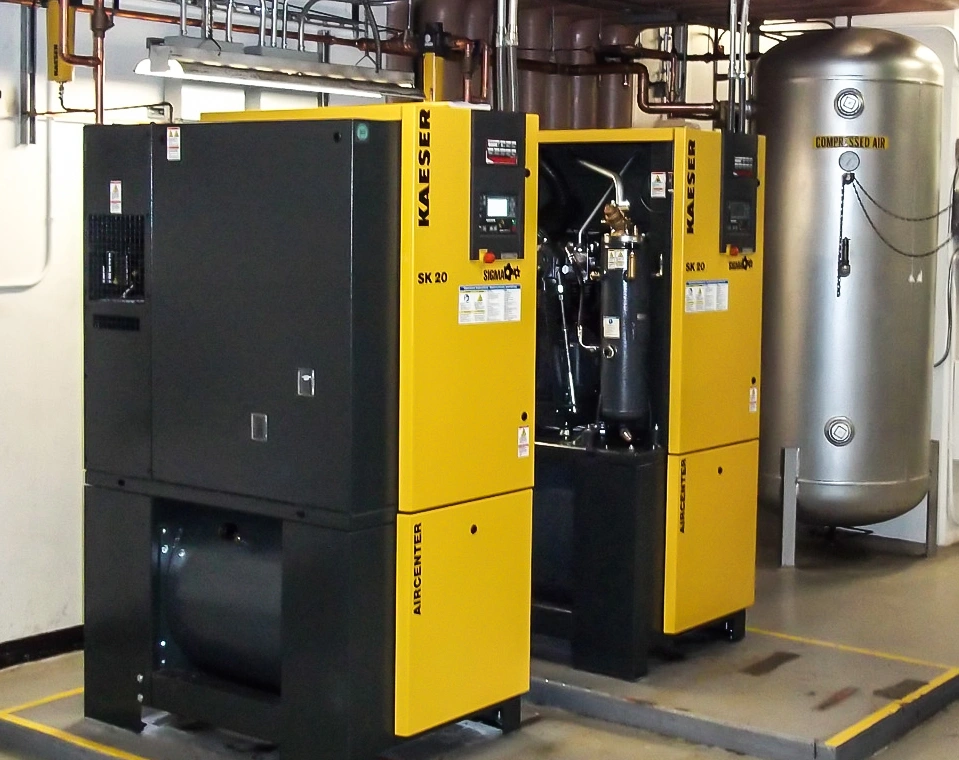
Quick Takeaway
Primary Insight: In a rotary screw vs rotary vane compressor decision, both technologies use oil injection to do the same core job, so for most industrial buyers the deciding factor is duty cycle, upfront cost, and whether the unit also needs to pull vacuum, not raw efficiency.
Key Fact: A single-stage rotary vane compressor can hit a specific power efficiency around 16.1 kW per 100 cfm, and sliding vane units are normally less expensive to buy than a similarly sized rotary screw compressor, according to CAGI's own selection guide.
Best Suited For: Facility managers comparing compressor technologies before a purchase, not just comparing brands within one technology.
Rotary screw and rotary vane compressors get talked about like they're two brands of the same machine. They're not. A rotary screw vs rotary vane compressor decision is a choice between two genuinely different mechanical approaches to compressing air, and the difference shows up first in what wears out and what the unit can double as, long before it shows up on a spec sheet.
Most buyers only ever compare rotary screw against reciprocating compressors, which we've covered in a separate breakdown. Rotary vane rarely makes that shortlist, even though it directly overlaps with rotary screw across a wide horsepower range and has one capability rotary screw doesn't.
This guide covers how each compressor type actually works, where their capacity and cost numbers diverge, what wears out first on each one, and the one application where rotary vane has a real edge.
Rotary Screw vs Rotary Vane Compressor: How Each One Works
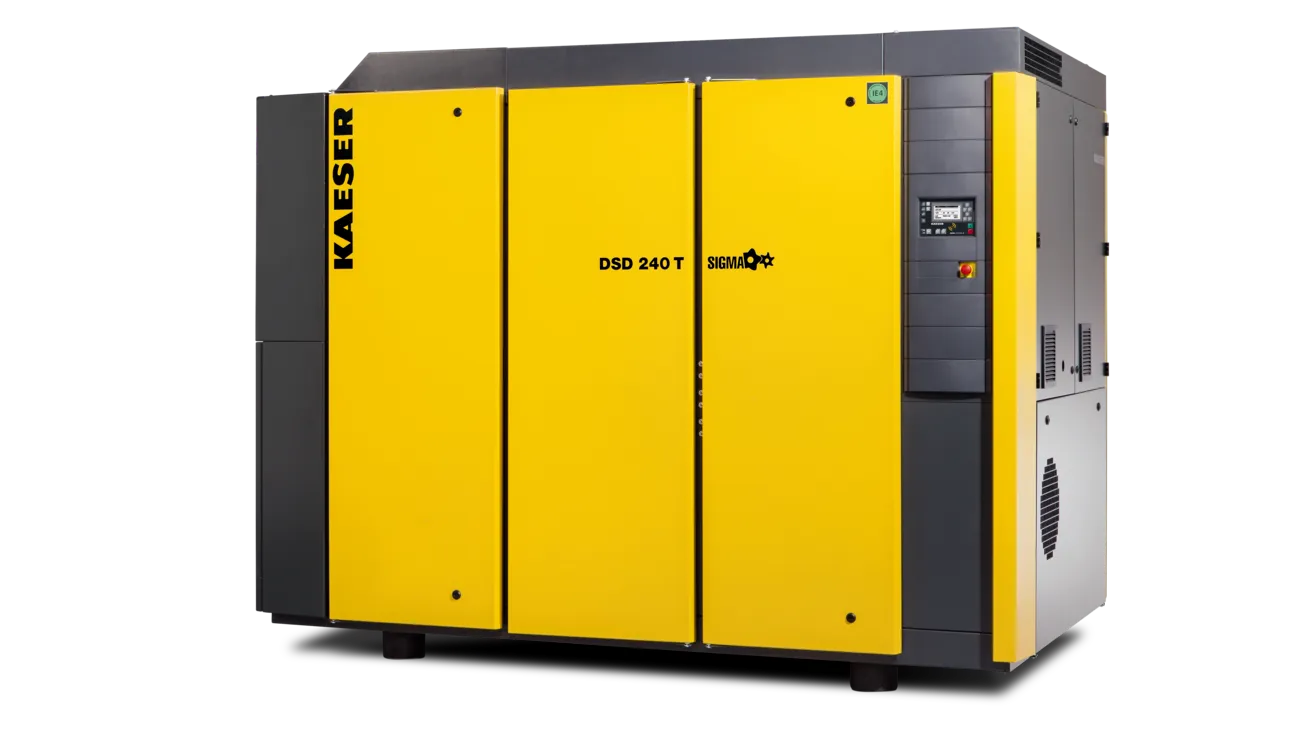
A rotary screw vs rotary vane compressor comparison starts with two different ways of trapping and shrinking a pocket of air. A rotary screw compressor uses two intermeshing helical rotors, while a rotary vane compressor uses a single eccentric rotor with sliding vanes, and each design compresses air through a completely different mechanical motion.
In a rotary screw compressor, two intermeshing rotors, one with helical lobes and one with helical grooves, trap air between them. As the rotors turn, a lobe on one rotor rolls into a groove on the other, and the point where they intermesh moves progressively along the length of the rotors, shrinking the space the trapped air occupies until it reaches the discharge port.
A rotary vane compressor works differently. A solid cylindrical rotor, mounted off-center inside a fixed cylindrical housing, holds a set of vanes in radial slots. As the rotor spins, centrifugal force pushes the vanes outward against the housing wall, and the volume between the rotor, two adjacent vanes, and the housing shrinks as the rotor turns, compressing the air trapped inside that cell.
Both designs lean on oil injection to do three jobs at once: lubricate moving surfaces, seal internal clearances, and carry away the heat of compression. That similarity is exactly why the two get lumped together as "oil-injected rotary compressors," even though the mechanism doing the compressing is nothing alike.
Where the Numbers Diverge: Capacity, Pressure, and Cost
Rotary screw and rotary vane compressors overlap across a wide horsepower range, but their capacity ceilings, pressure ranges, and typical purchase cost split in different directions.
| Metric | Rotary Screw | Rotary Vane |
|---|---|---|
| Horsepower range | 3 to 700 hp | 2 to 275 hp |
| Flow capacity | 8 to 4,000 cfm | 5.1 to 1,251 acfm |
| Discharge pressure | 50 to 250 psig | 85 to 188 psig |
| Typical purchase cost | Baseline | Normally less expensive than a similarly sized screw unit |
Source: CAGI Rotary Air Compressor Selection Guide
Rotary screw is the only option once a job needs more than roughly 275 hp or discharge pressure above 188 psig, since rotary vane doesn't scale into that range at all. Inside the range where both technologies compete, roughly 2 to 275 hp, rotary vane compressors are normally the lower upfront cost option for a similarly sized unit, which is where the purchase decision actually gets interesting instead of being decided by capacity alone.
What Wears Out First: Maintenance Differences
The vanes themselves are the part unique to a rotary vane compressor's wear profile, something a rotary screw compressor simply doesn't have.
CAGI's selection guide is direct about it: the vanes in a sliding vane compressor "are wear items and require replacement if their wear becomes excessive due to poor lubrication or ingestion of particulate-contaminated air." That's a maintenance category rotary screw compressors don't have an equivalent to. A rotary screw compressor's wear profile instead centers on the airend's internal seals and bearings, the oil separator element, and the lubricant itself, all covered by the preventive maintenance cycle in our Kaeser compressor maintenance guide.
Neither maintenance profile is inherently worse. They're just different failure points to plan around, and a facility's air quality (how much particulate the intake filtration is actually catching) matters more to vane wear specifically than it does to a rotary screw compressor's day-to-day service needs.
The One Application Where Rotary Vane Has a Real Edge
A rotary vane compressor can do a job a rotary screw compressor generally can't: pull vacuum.
Per CAGI, sliding vane compressors "do see significant service as a vacuum pump for many industrial and medical applications requiring vacuum," and outside of that specific niche, "sliding vane compressors can be used in any application where rotary screw compressors operate." That combination, broad interchangeability with rotary screw plus a genuine vacuum-pump role, is the one place rotary vane has a capability rotary screw doesn't, rather than just a different set of tradeoffs.
For a facility that only needs compressed air, that vacuum capability doesn't move the decision much. For one that needs both compressed air and a vacuum source, evaluating whether a single vane-based platform can cover both jobs is worth doing before buying two separate pieces of equipment.
Frequently Asked Questions
What is a rotary vane compressor?
A rotary vane compressor is a positive displacement compressor that uses a cylindrical rotor mounted off-center inside a fixed housing, with sliding vanes that press outward against the housing wall to trap and compress air as the rotor turns.
How does a rotary screw compressor work?
A rotary screw compressor works by using two intermeshing helical rotors, one with lobes and one with grooves, that trap air between them and progressively shrink the trapped volume as the rotors turn, compressing the air until it reaches the discharge port.
Is a rotary vane compressor cheaper than a rotary screw compressor?
A rotary vane compressor is normally less expensive to purchase than a similarly sized rotary screw compressor, according to CAGI's selection guide, though the actual price gap depends on the specific horsepower, pressure, and accessories being compared.
Can a rotary vane compressor be used as a vacuum pump?
A rotary vane compressor can be used as a vacuum pump, and the technology sees significant use in industrial and medical applications that specifically require vacuum, a role rotary screw compressors generally aren't built to fill.
Do rotary vane compressors need different maintenance than rotary screw compressors?
Rotary vane compressors have a maintenance category rotary screw compressors don't: the vanes themselves are wear items that need replacement as they wear from use or from particulate-contaminated air, while a rotary screw compressor's maintenance instead centers on airend seals, bearings, and the oil separator element.
Choosing Between Rotary Screw and Rotary Vane for Your Plant
Rotary screw and rotary vane compressors both do the job well within their own range. Above roughly 275 hp or 188 psig, rotary screw is the only real option. Below that ceiling, the decision comes down to upfront cost, how much particulate the intake air carries, and whether a single unit needs to handle vacuum duty alongside compressed air.
American Compressor is an authorized Kaeser dealer specializing in rotary screw systems, so when the numbers above point toward rotary screw as the right fit for a facility's horsepower and pressure needs, that's exactly the sizing and application work we do every day. Talk to American Compressor about sizing the right rotary screw system for your application once you've worked out which technology actually fits.