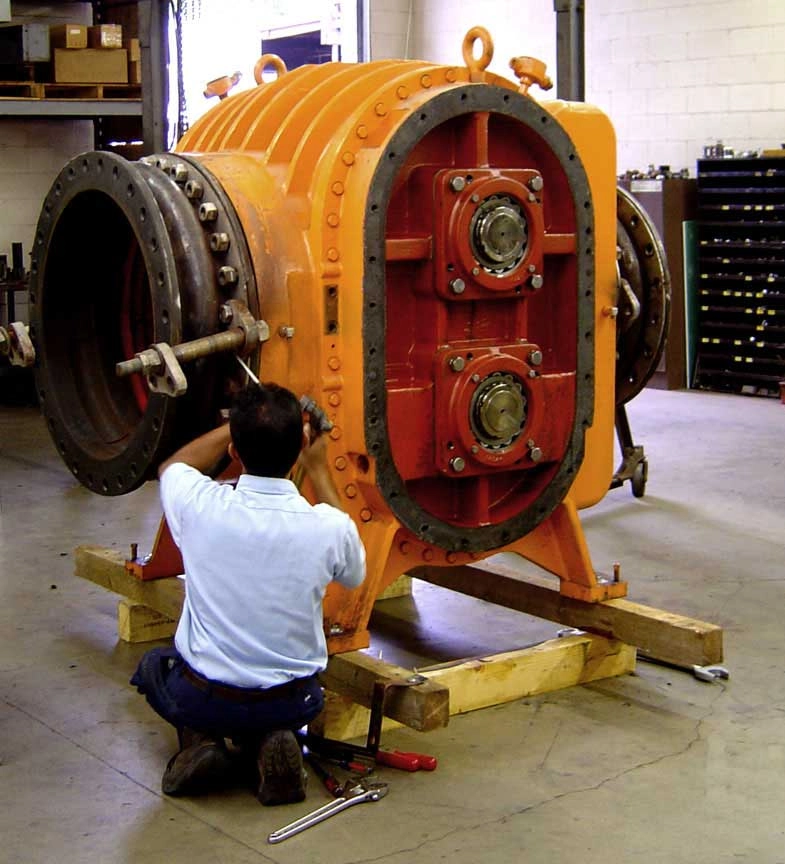
A worn rotary lobe blower is rarely a dead one, a fact which reframes the entire Roots blower rebuild vs. replace decision because it means age alone is not a reason to buy a new machine. Roots states that it repairs, restores, and refurbishes blowers to factory specifications regardless of the years of operation the unit has endured. A blower that has run continuously in an aeration basin for two decades is, in most cases, a rebuild candidate rather than scrap.
That is a meaningfully different situation from a rotary screw compressor, where a worn compression element permanently taxes efficiency even after service. A rotary lobe blower is a simpler machine: cast iron casing, two impellers, timing gears, bearings, and seals. Restore the clearances and the bearings, and you have substantially restored the machine.
So the real question is not whether your blower can be rebuilt. Usually it can. The question is whether rebuilding it is the right economic and operational decision for the duty it serves, and there are specific conditions where the answer flips to replacement.
How a Rotary Lobe Blower Actually Wears Out
A positive displacement blower moves a fixed volume of air with every rotation, and it does that by maintaining extremely tight clearances between the impellers and the casing without the two ever touching. Everything that goes wrong mechanically is some version of those clearances drifting.
Three wear paths account for most failures. Bearings lose their precision, which lets the shafts move and the clearances open. Timing gears wear, which changes the phase relationship between the two impellers and risks contact. And the lobes themselves erode, particularly where process material or unfiltered intake air has been passing through the unit.
None of this announces itself dramatically. Bearing wear, lobe clearance drift, and inlet filter restriction all show up first as elevated motor amps and rising discharge temperature. The blower keeps running and the basin keeps aerating, but the machine is drawing more current to do the same work. Catching that drift during scheduled service is how a rebuild stays a rebuild rather than becoming a catastrophic failure that takes the casing with it.
What a Rebuild Actually Restores
A proper rebuild is not a repair in the sense of swapping a broken part. The unit is disassembled, inspected, and returned to factory specification: bearings, seals, and gaskets replaced, timing gears checked and reset, clearances measured and brought back within tolerance, and the rotors balanced. Roots' own service program describes exactly this, restoring and refurbishing units to factory specifications with genuine OEM parts.
This is why the rebuild economics on a rotary lobe blower are more favorable than most operators assume. The expensive castings, the casing and headplates and impellers, are the parts that typically survive. What gets consumed are bearings, seals, and gears, and those are replaceable. A rebuild buys back the clearances, and with them the efficiency and the service life.
There is also a speed argument that matters more in this category than in almost any other. Roots operates an exchange program specifically to return operations to service quickly, and a rebuilt or exchanged unit will often beat a new-unit lead time. When a basin is offline, that difference is the whole ballgame.
When a Rebuild Is the Right Call
For a Roots blower, rebuilding is the default answer more often than not. The case is strong when these hold:
- The castings are sound. If the casing, headplates, and impellers are intact, the expensive part of the machine is still good and the rest is consumable.
- The blower is correctly sized for the duty. A unit that has been doing its job well is worth restoring to do it again.
- Downtime is the binding constraint. A rebuild or exchange unit typically returns to service faster than ordering and installing a new blower. When a basin is offline or a conveying line is stopped, speed outweighs almost everything.
- Capital is unavailable but maintenance budget is. This is not an engineering argument, but it is a real one. Municipal and agency buyers frequently have operating dollars available when a capital request would take quarters to clear.
- The unit is a standby or low-hour machine. Efficiency arguments scale with run hours. A backup blower that runs occasionally does not justify replacement on operating cost, because there is little operating cost to save.
Notice that most of these describe the ordinary case. That is the point. A distributor who recommends a new blower on every service call is selling rather than advising, and on rotary lobe equipment the honest answer is frequently to fix what you have.
When Replacement Is the Better Decision
Rebuilding stops making sense in a narrower set of circumstances, but they are real and they matter:
- Casing or impeller damage. If process material, liquid carryover, or a foreign object has scored the casing or damaged the lobes, the parts that were supposed to survive did not. That is the point where the rebuild cost stops being economical.
- The blower is the wrong size for the basin it now serves. Plants change. Loading changes, basins get retrofitted with different diffusers, and permits change. A blower selected for conditions that no longer exist is fighting its curve every hour it runs, and rebuilding it locks that mistake in for another service life. This is the single most common reason a rebuild is the wrong choice.
- Repeat failures. A unit that has been rebuilt and failed again is telling you something, usually about the application rather than the machine. Diagnose the cause before spending on a second rebuild.
- The unit is chronically throttled or oversized. A positive displacement blower delivers essentially the same flow regardless of backpressure, which means an oversized unit cannot simply be turned down. It moves air the process does not need and you pay for it, continuously.
Aeration is the single largest energy consumer in most wastewater treatment plants, which is why the sizing question carries so much weight here. The blower system, not the compressor, drives operating cost in an activated sludge plant. A blower that is wrong for its duty is not a maintenance problem. It is a permanent line item.
What to Check Before You Decide
The decision needs information most plants can gather in an afternoon:
| What to Check | Why It Decides the Question |
|---|---|
| Casing, headplate, and impeller condition | The single biggest fork in the decision. Sound castings favor rebuild; scored or damaged ones favor replacement. |
| Motor amp draw against baseline | Rising current for the same duty indicates clearance drift, bearing wear, or intake restriction. |
| Discharge temperature trend | Rising discharge temperature is an early wear signal and often appears before any audible symptom. |
| Current basin demand vs. blower rating | Reveals whether the unit still matches the duty, or was sized for a plant that no longer exists. |
| Annual run hours | Determines whether operating-cost arguments carry any weight at all. Standby units rarely justify replacement. |
| Service history | A first rebuild is routine. A second rebuild after a short interval is a signal to investigate the application. |
With those six answers in hand, the decision is usually not close. The failure mode is deciding without them, which is how a plant either scraps a perfectly rebuildable blower or pours money into restoring a unit that never fit the basin in the first place.
Frequently Asked Questions About Roots Blower Rebuilds
Is it worth rebuilding a Roots blower?
Rebuilding a Roots blower is worth it in most cases, because the expensive components (the cast iron casing, headplates, and impellers) typically survive while the consumables (bearings, seals, and timing gears) are replaceable. Roots restores and refurbishes blowers to factory specifications regardless of how many years the unit has been in service. Replacement becomes the better call when the castings are damaged or the blower no longer matches the duty it serves.
How long does a Roots blower last?
A Roots blower's service life depends far more on maintenance and application than on age. Because the machine can be restored to factory specification through rebuild, a well-maintained rotary lobe blower can remain in service for decades across multiple rebuild cycles. Lubrication discipline, intake filtration, and catching clearance drift early are what determine longevity.
What are the signs a Roots blower needs to be rebuilt?
Signs a Roots blower needs rebuilding include rising motor amp draw for the same duty, increasing discharge temperature, unusual noise or knocking, and vibration. Bearing wear, lobe clearance drift, and inlet filter restriction typically appear first as elevated amps and discharge temperature, well before the unit produces an obvious mechanical symptom.
Is a rebuilt Roots blower as good as a new one?
A rebuilt Roots blower restored to factory specification performs to the original design of that unit, because the rebuild returns the internal clearances, bearings, and gears to spec. What a rebuild cannot do is change the blower's size or rating, so if the original unit was mismatched to the application, the rebuilt one will be too.
How quickly can a Roots blower be rebuilt?
Rebuild turnaround depends on the unit and parts availability, but Roots operates an exchange program specifically to return operations to service quickly, and a rebuild or exchange will frequently beat the lead time on a new blower. When a basin is offline, that speed advantage often decides the question on its own.
Fixing What Should Be Fixed, Replacing What Should Not
The instinct to replace a twenty-year-old blower is understandable and usually wrong. Rotary lobe blowers were designed to be rebuilt, and the parts that make them expensive are the parts that tend to survive. The genuine decision point is not the machine's age. It is whether the castings are sound and whether the blower still fits the duty it was bought for.
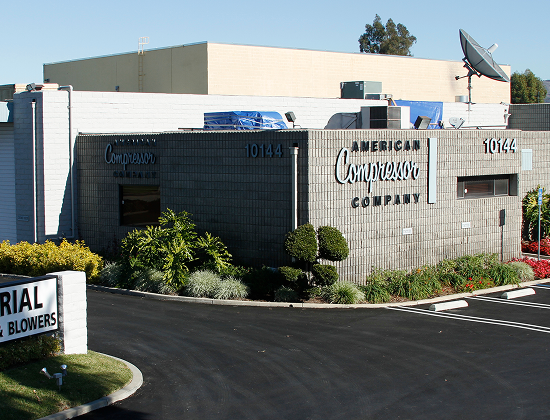
American Compressor Company has been a Roots distributor in Los Angeles County since 1961, and we rebuild these units as well as sell them. That is worth saying plainly, because it means we have no incentive to push the answer one way. When your blower should be rebuilt, we will tell you so. When it genuinely should be replaced, we can show you the Roots lineup and explain exactly why.
If you have a blower down, or one that is drawing more amps than it used to, talk to our team and we will inspect it before anyone quotes you a new unit.