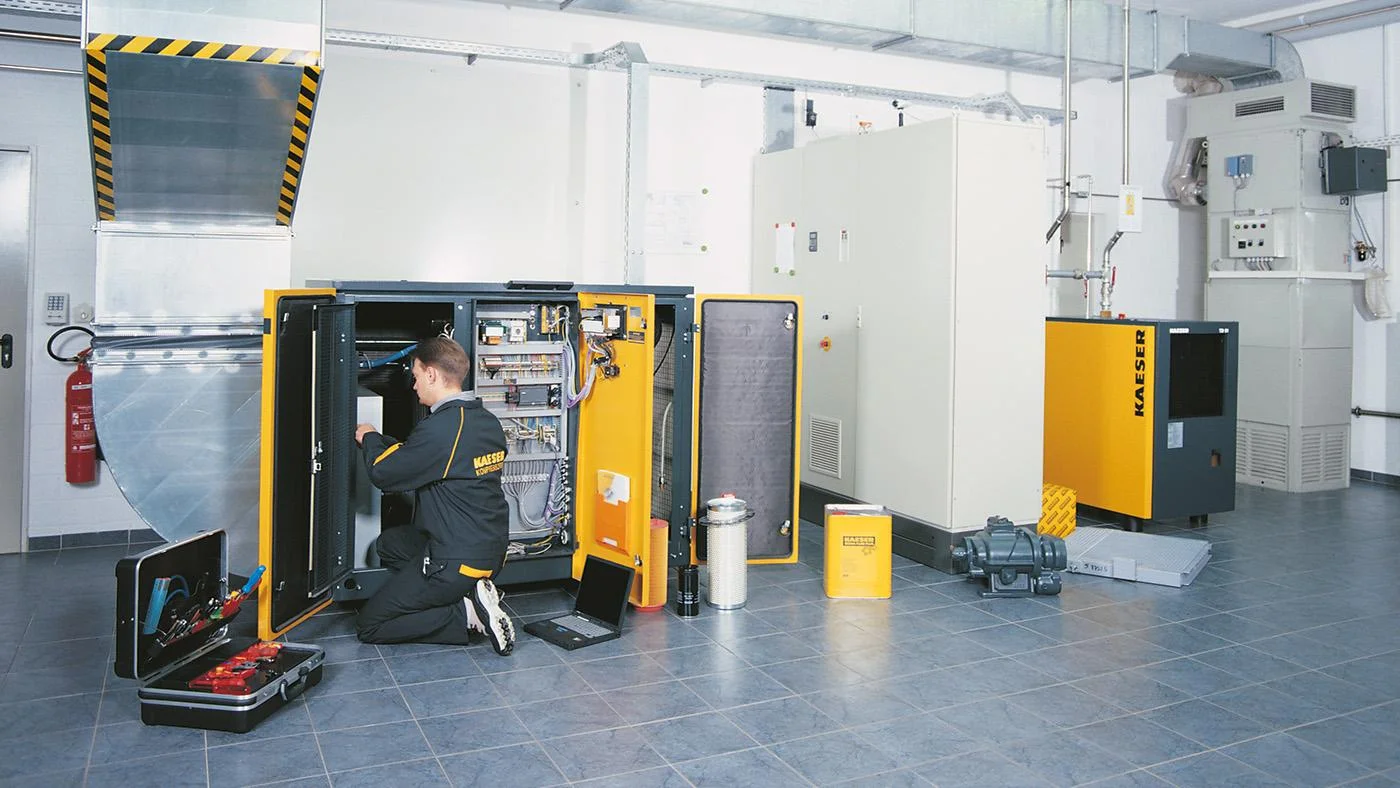
Your air compressor goes down in the middle of a production shift. The parts line stops. The paint booth goes cold. A pneumatic tool line sits idle. For most LA County manufacturers, fabricators, and industrial shops, a compressor failure is not an inconvenience — it is a revenue event. Every hour offline has a number attached to it.
That reality is why choosing the right air compressor repair provider matters more than most facility managers realize before the moment they need one. In Los Angeles, where industrial operations run across one of the most active manufacturing corridors in the country, the difference between a qualified service partner and an unqualified one shows up fast.
This guide walks through exactly what to expect from a professional air compressor repair — what the process looks like, what questions to ask, and what separates a capable service provider from one that will cost you more money in the long run.
Why Air Compressor Repairs Fail Twice
The most common and costly pattern in industrial compressor maintenance is the double repair: a technician fixes the immediate symptom, the machine runs for a few weeks, and then a deeper underlying problem surfaces. The original repair was not wrong — it was just incomplete.
This happens for a predictable reason. Rotary screw compressors, the most common type in LA manufacturing environments, are precision machines with interdependent systems. A bearing failure, for example, can be triggered by oil contamination, which can itself trace back to a failed separator element or a clogged intake filter running in a high-particulate environment. Replacing the bearing without addressing the contamination source produces the same failure, usually within months.
A qualified repair provider diagnoses the root cause, not just the presenting failure. That distinction is the most important thing to understand before you choose who to call.
What a Professional Air Compressor Repair Process Looks Like
When a trained industrial compressor technician arrives at your facility, the process should follow a consistent sequence. Here is what each stage involves and why it matters.
Initial Diagnostics
Before any components are removed, a professional technician runs a diagnostic review of the machine's operating data, error codes, and service history. Most modern rotary screw compressors log fault histories and runtime parameters that tell an experienced technician a significant amount before the panel is ever opened.
A diagnostic review should cover operating pressure, temperature readings at key points, oil condition, separator delta pressure, and any active or recent fault codes. Skipping this step and going straight to disassembly is a sign of an inexperienced technician or a shop that bills by the part replaced rather than the problem solved.
Component Inspection and Root Cause Analysis
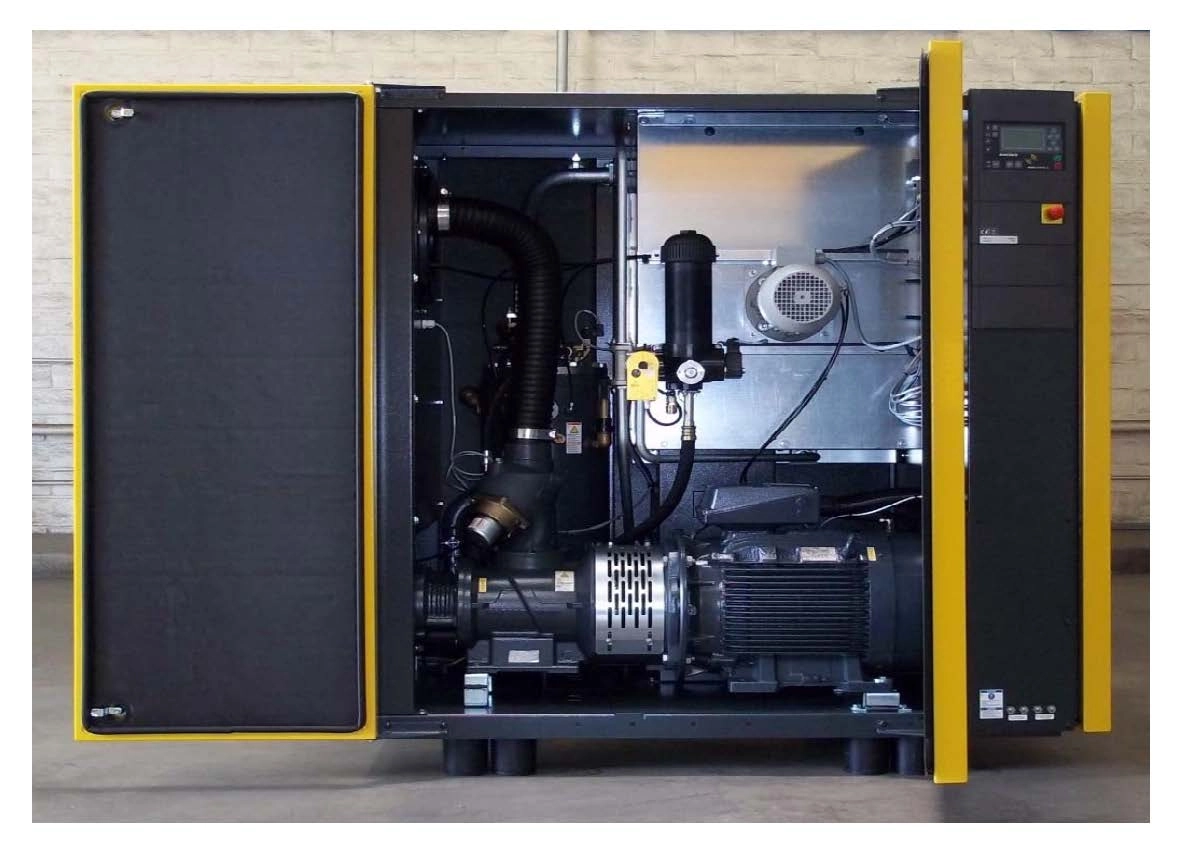
Once the machine is safely de-energized and isolated, the technician inspects the components most likely connected to the failure. For a rotary screw machine, common inspection points include the air end, inlet valve, minimum pressure valve, separator element, oil filter, and drive system.
Root cause analysis answers the question: what condition created this failure? It is not enough to know that a seal failed. A complete diagnosis tells you why it failed, which determines whether it will fail again.
Repair Scope and Parts
A professional service provider gives you a written repair scope before work begins. This document should identify every component being replaced, the reason for replacement, the parts being used (OEM vs. aftermarket), and the labor involved.
On this point: parts matter. For Kaeser rotary screw compressors, OEM parts are engineered specifically for the air end clearances and oil chemistry that Kaeser machines require. Aftermarket parts may fit and function initially but tend to produce shorter service intervals and can void manufacturer service agreements. An authorized Kaeser service provider uses factory-approved components.
Repair Execution and Verification
The repair itself follows manufacturer specifications. After reassembly, the technician should run a post-repair verification: confirm the machine starts cleanly, reaches set pressure, holds pressure without excessive cycling, and shows no fault codes. Temperature and pressure readings should be logged at startup and again after the machine reaches operating temperature.
A proper post-repair verification takes time. Any shop that completes a repair and immediately hands you back the machine without a run-verification is cutting a corner that may show up weeks later.
Service Documentation
You should receive written documentation of everything: what was found, what was replaced, what parts were used, and what the post-repair readings showed. This record becomes part of your machine's service history, which matters both for warranty purposes and for planning future maintenance intervals.
How to Choose an Air Compressor Repair Provider in Los Angeles
LA County has no shortage of shops that will send a technician to your facility. The harder question is which ones are equipped to actually solve your problem versus which ones will close the ticket and leave you with a recurring issue. Here are the factors that matter.
Factory Authorization
If you run Kaeser compressors, Atlas Copco, Ingersoll Rand, or another major brand, the single most important credential to look for is factory authorization from that manufacturer. Authorized dealers and service centers have received training directly from the manufacturer, have access to OEM parts, and are typically required to meet service standards the manufacturer enforces.
For Kaeser compressors specifically, factory-authorized service matters because Kaeser machines use proprietary air end geometry and oil chemistry. A generic compressor shop may be able to replace external components, but air end work and internal diagnostics require manufacturer-level training.
Emergency Service Availability
Industrial compressors do not fail on convenient schedules. A compressor repair company that cannot respond to a failure outside of business hours is not a viable primary service partner for a facility that runs multiple shifts or operates near-continuous production schedules. Confirm before you need it: does the provider offer 24/7 emergency service? What is the typical response time for emergency calls in LA County?
Service History and References
A qualified provider should be able to give you references from industrial customers in LA County who have used them for compressor repair work. Relevant verticals include food and beverage, automotive, aerospace, machining, and general manufacturing — the sectors that make up the backbone of LA County industrial activity.
A provider that primarily services commercial HVAC compressors or small shop compressors is a different category than one with documented experience on industrial rotary screw and high-pressure compressor systems.
Transparent Pricing and Written Estimates
Reputable shops provide written estimates before work begins and do not materially exceed those estimates without prior authorization. If a shop is reluctant to put a scope and estimate in writing, that is a reliable warning sign.
Compressor repair pricing in Los Angeles varies significantly by machine size, failure type, and parts required. A straightforward separator element replacement on a 25–50 HP rotary screw machine will cost substantially less than an airend rebuild on a 100+ HP unit. Legitimate providers will give you a range based on the diagnostic before committing to a final number.
Preventive Maintenance Relationships
The best time to find a repair provider is before you need one. Industrial compressor shops that have an active preventive maintenance contract typically prioritize their PM customers when emergency repair requests come in. A facility manager who has never called a shop before has lower dispatch priority than an account the shop already knows and services.
A preventive maintenance contract also means the technician who shows up for an emergency is already familiar with your specific machine, its service history, and its known quirks. That familiarity cuts diagnostic time significantly.
Common Air Compressor Repairs in Los Angeles Industrial Environments
LA County's industrial corridor spans conditions that put specific stresses on compressed air systems. High ambient temperatures during summer months, particulate-heavy environments in manufacturing and fabrication shops, and facilities running near-continuous production all influence failure patterns. The most common repair categories that LA industrial facilities encounter include:
- Separator element replacement: The separator element removes oil from the compressed air stream. In high-cycle or dusty environments, elements load up faster than the standard maintenance interval accounts for. A loaded separator causes elevated discharge temperature, higher energy consumption, and oil carryover into the air lines.
- Inlet valve and unloader issues: The inlet valve controls airflow into the compressor on load and unload cycles. Valve wear, sticking, or solenoid failure causes erratic pressure regulation, excessive cycling, and, in some cases, failure to unload properly — a condition that runs the machine hot and accelerates oil degradation.
- Bearing and shaft seal failures: Bearings in rotary screw compressors are high-load components that degrade with oil contamination, extended run hours beyond service intervals, and improper oil viscosity. Shaft seals that fail allow oil migration into the air system.
- Minimum pressure valve failures: The MPV maintains system pressure during unloaded operation. A failed MPV causes pressure drop and forces the compressor to work harder to maintain system pressure, increasing energy consumption and heat load.
- Cooling system issues: In LA's summer heat, cooling system performance becomes a limiting factor. Clogged coolers, failing cooling fans, and inadequate ventilation in the compressor room combine to push discharge temperatures above operating limits, triggering thermal shutdowns.
- Drive system wear: Belt-driven units require periodic belt replacement and tensioning. Direct-drive and gear-drive systems have their own wear patterns. A vibration analysis at service visits can catch drive system issues before they produce a failure.
The FAQ on Air Compressor Repair in LA
How long does a typical air compressor repair take?
For a straightforward repair — separator element, inlet valve, minor electrical — a same-day or next-day turnaround is realistic. Airend rebuilds and major internal work on large-frame compressors can take three to seven business days depending on parts availability. Your provider should give you a timeline estimate before beginning work.
Should I repair or replace my compressor?
The general rule of thumb in industrial compressor service is that repair costs exceeding 50% of the machine's replacement value, combined with a compressor that is past its design life (typically 15–20 years for a rotary screw unit at normal utilization), suggest replacement is more economical. A compressor in its first 10 years with a single significant failure is almost always worth repairing. Your service provider should give you a direct, unbiased answer on this question — a provider who defaults to replacement when repair is appropriate is not acting in your interest.
Do I need to shut down my facility for a compressor repair?
For smaller facilities with a single compressor, yes — though a rental compressor can keep production running while the machine is down. For facilities with redundant compressor capacity, a qualified service provider can often sequence repairs to keep compressed air available while work is underway. This is another reason a service relationship with a provider who knows your system pays dividends during an emergency.
What is the difference between a repair and a rebuild?
A repair addresses specific failed components while leaving the rest of the machine in its current condition. A rebuild, also called an overhaul, involves disassembling major systems — typically the air end — replacing all wear components, fitting moving parts to specification, and reassembling to factory tolerance. A rebuild is appropriate when a machine has reached high run hours or has sustained internal contamination damage across multiple components.
How do I know if my compressor is being properly maintained between repairs?
Properly maintained rotary screw compressors should be serviced on a defined interval — typically every 2,000–4,000 hours depending on the manufacturer specification and operating environment. At each service visit, the technician should be logging oil condition, separator delta pressure, operating temperatures, and run hours. If your current service provider is not providing written service records at each visit, that is a gap worth addressing.
Keeping Your Compressed Air System Running in Los Angeles
Air compressor repair in Los Angeles is not a commodity. The technician experience, parts quality, and diagnostic approach vary significantly between providers, and those differences show up in how long a repair lasts and how much it costs over the life of the machine.
American Compressor Company has been servicing industrial compressed air systems across LA County since 1961. As an authorized Kaeser service partner, we carry OEM parts, deploy factory-trained technicians, and offer 24/7 emergency response for facilities that cannot afford extended downtime. Our approach is to diagnose the root cause and fix it correctly the first time — because a repair that fails again is not a repair.
To schedule a diagnostic or discuss a repair need for your facility, call us or contact us through our website. We serve Santa Fe Springs, Los Angeles, Long Beach, Torrance, Downey, and facilities throughout LA County.