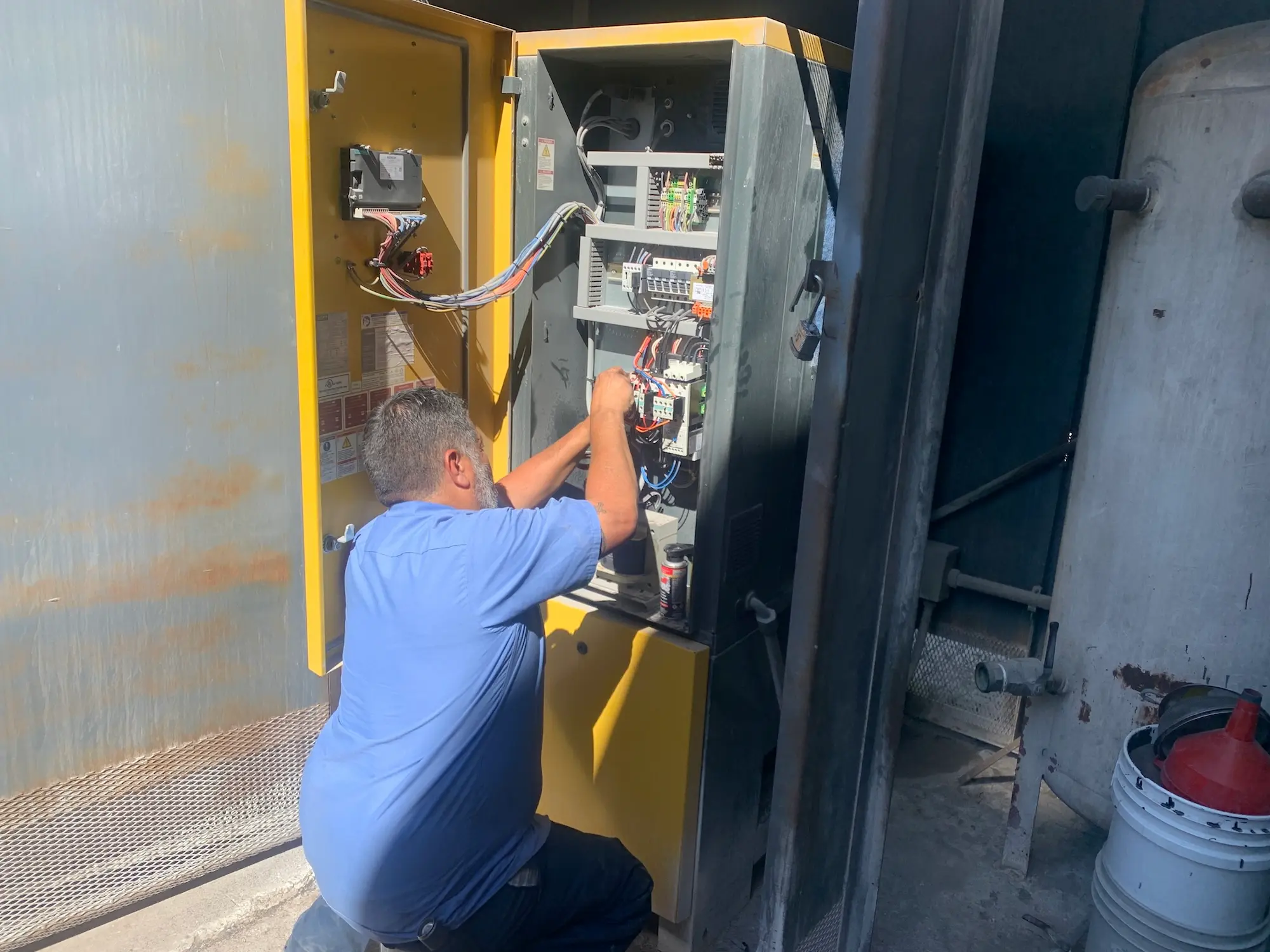
Most air compressor failures are not sudden. They are the end result of a process that started weeks or months earlier: a filter that was overdue for replacement, oil that had degraded past its useful life, a separator element running at elevated differential pressure that nobody checked. By the time the machine shuts down, the failure has been in progress for a while.
Preventive compressor maintenance exists to interrupt that process before it produces a failure. For LA County manufacturers, fabricators, and industrial facilities that depend on a continuous compressed air supply, a structured PM program is the most cost-effective investment in uptime available. It is also frequently misunderstood: many facility managers treat "preventive maintenance" as a synonym for "oil change," when in practice a complete PM program covers a much broader scope of the machine.
This post explains what industrial air compressor preventive maintenance actually involves, what the service intervals look like for common compressor types, and how a well-designed PM program translates into real operational outcomes for facilities in Los Angeles.
What Preventive Maintenance Is (And What It Is Not)
Preventive maintenance is a scheduled, proactive service program designed to keep equipment running within its design parameters and catch developing problems before they cause an unplanned shutdown. The word "preventive" is key: the goal is to prevent failures, not respond to them.
This is different from reactive maintenance, which is service performed after a failure has occurred. Reactive maintenance is inherently more expensive: it includes emergency labor rates, expedited parts, and the cost of unplanned downtime. A consistent PM program replaces most of that reactive spend with planned spend at lower cost and on your schedule rather than the machine's.
It is also different from predictive maintenance, which uses sensor data and condition monitoring to forecast when specific components are likely to fail. Predictive maintenance is increasingly common on large industrial installations and adds a layer of precision to interval-based PM programs. For most LA industrial facilities running compressors in the 25–200 HP range, interval-based preventive maintenance is the standard approach and the right starting point.
The Core Components of a Compressor PM Program
A professional air compressor preventive maintenance program covers the following systems and components at each service interval. What gets checked and replaced depends on the machine type, operating environment, and hours run since the last service.
Oil and Lubrication System
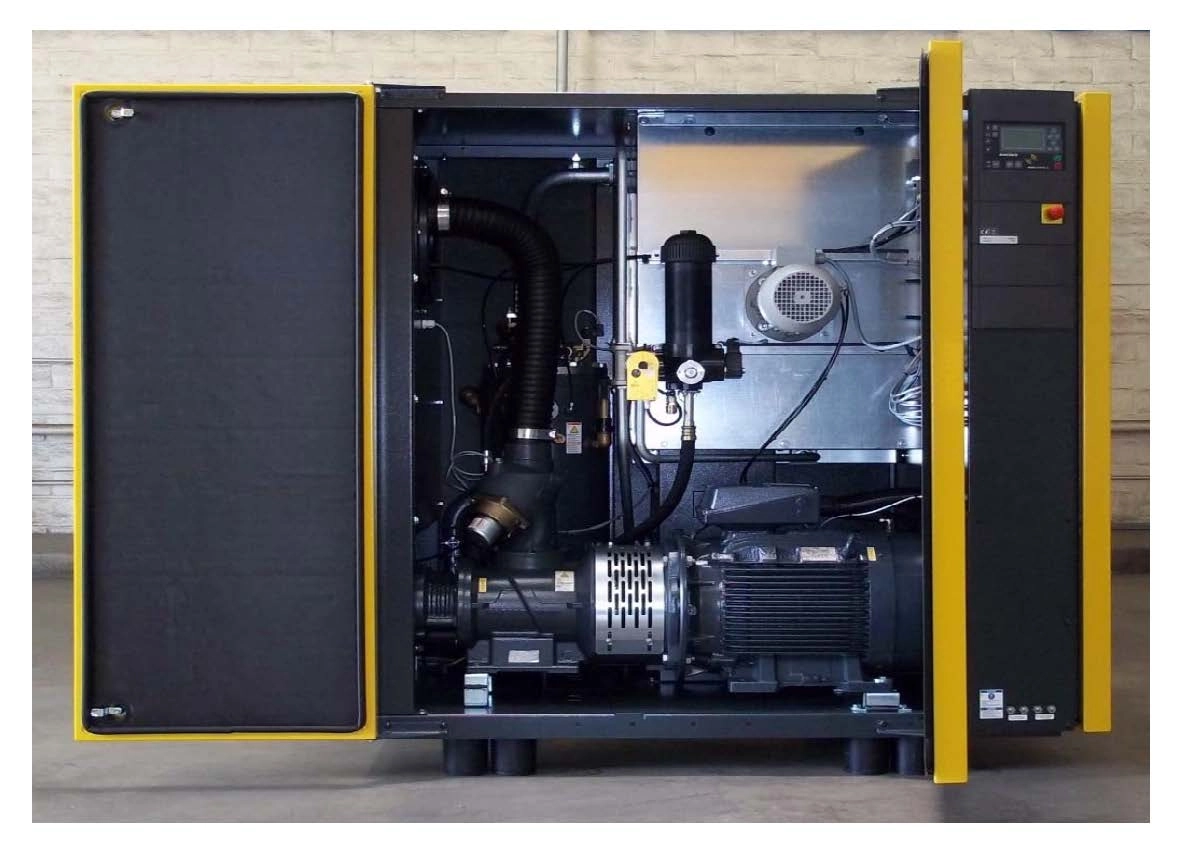
Rotary screw compressors are oil-flooded machines: the oil serves as a coolant, a sealant between the rotors, and a lubricant for bearings and moving parts. Oil condition is central to the health of the entire machine.
At each PM service, oil condition should be evaluated. Modern synthetic compressor oils have service lives of 4,000–8,000 hours under normal operating conditions, but that number compresses significantly in environments with high ambient temperature, high humidity, or contaminated air intake. Facilities in LA's industrial corridor often run compressors in environments that fall outside textbook operating conditions.
Oil change intervals that are extended past the manufacturer's specification produce measurable consequences: elevated viscosity, increased acid content, varnish buildup on internal surfaces, and accelerated wear on bearings and seals. The cost of extending an oil change by one service interval is almost always higher than the cost of the oil itself.
Air and Oil Filters
Rotary screw compressors use multiple filter stages: an intake air filter that removes particulates before they enter the compression chamber, and an oil filter that keeps the lubrication system clean.
Intake filter condition is particularly important in LA industrial environments. Facilities near manufacturing operations, construction activity, or high-traffic areas experience elevated particulate levels in the intake air that load filters faster than standard intervals predict. A clogged intake filter restricts airflow, forces the machine to work harder to maintain output pressure, and increases energy consumption. In severe cases, particulate breakthrough past a loaded filter contaminates the oil system.
Filter replacement is one of the highest-leverage, lowest-cost interventions in a PM program. The parts cost of a filter is a fraction of the downstream cost of running a machine on a dirty filter.
Separator Element
The separator element is responsible for removing oil from the compressed air stream after compression. It is one of the most important wear components in a rotary screw machine and one of the most commonly overlooked in facilities that do informal rather than structured maintenance.
A loaded separator element shows up as elevated differential pressure across the separator: the machine has to work harder to push air through the element, which increases energy consumption and discharge temperature. Oil carryover past a failed separator element contaminates the downstream air distribution system and any equipment or processes using that air.
Separator elements are typically replaced on a calendar or hours-run interval, but differential pressure monitoring between service visits is a reliable early indicator of accelerated loading. In high-cycle environments, separator life can be substantially shorter than the standard interval.
Belts, Couplings, and Drive Systems
Belt-driven compressors require periodic belt inspection and tensioning. Belts that are operating at incorrect tension produce vibration, accelerate wear on bearings and pulleys, and can fail without warning if overtightened. At each PM visit, belt condition and tension should be checked against manufacturer specification.
Direct-drive and gear-coupled machines do not have belts to service, but couplings and flexible elements still require inspection. Vibration levels across the drive system are a useful leading indicator of alignment or wear issues developing in the drivetrain.
Cooling System
Cooling performance is a function of cooler cleanliness, airflow through the cooler, and ambient temperature conditions in the compressor room. In Los Angeles, where summer ambient temperatures regularly reach levels that stress compressed air system cooling, keeping the cooling system in good condition is not optional.
At each service visit, coolers should be inspected and cleaned as needed. Cooler fins clog progressively with airborne dust and grease, reducing heat transfer efficiency. A compressor running with a partially fouled cooler runs hotter, which accelerates oil degradation, increases discharge temperature, and can trigger thermal protection shutdowns during peak ambient conditions.
Adequate ventilation in the compressor room is a related issue that a PM technician should flag if it is marginal. Compressor rooms that recirculate hot discharge air back through the cooler create a thermal feedback loop that no amount of cooler cleaning can compensate for.
Inlet Valve and Minimum Pressure Valve
The inlet valve controls airflow into the compression chamber during load and unload cycles. Wear on the valve seat, sticking solenoids, and dirt accumulation in the valve body are common causes of erratic pressure regulation and excessive cycling. At each PM service, valve operation should be verified and the solenoid tested.
The minimum pressure valve maintains system pressure during unloaded operation and prevents oil migration back through the separator during shutdown. MPV function should be confirmed at each service interval; a leaking or stuck MPV produces pressure instability and increases oil consumption.
Safety Systems and Controls
Every PM visit should include a check of the compressor's safety systems: high-temperature shutdown, high-pressure cutout, and any pressure relief valves in the system. These systems are the last line of defense against a fault condition becoming a dangerous event, and their function should never be assumed.
Control panel operation, fault history review, and verification that operating setpoints are correct for the facility's demand profile are also part of a complete PM service. A compressor running at a higher pressure setpoint than the facility actually requires is a common inefficiency that a trained technician will catch and flag.
Service Intervals for Rotary Screw Compressors
The specific intervals for each PM task vary by manufacturer, machine size, and operating environment. The following represents typical intervals for a Kaeser rotary screw compressor operating in a standard industrial environment. Facilities in high-temperature, high-particulate, or high-humidity conditions should discuss adjusted intervals with their service provider.
- Every 500 hours (or quarterly, whichever comes first): Inspect intake air filter; check oil level; inspect belt tension and condition (belt-drive units); verify control operation and check for active fault codes; visually inspect all hoses, fittings, and connections.
- Every 2,000 hours (or annually): Replace intake air filter; replace oil filter; check separator differential pressure; inspect and test inlet valve; inspect minimum pressure valve; clean cooler; check safety shutdowns.
- Every 4,000–8,000 hours (oil and separator interval): Change oil (synthetic compressor oil); replace separator element; replace belts if due; inspect coupling and drive system; conduct full operational test with logged readings.
- Every 16,000–20,000 hours (major service): Airend inspection; bearing replacement if indicated; full internal inspection of compression chamber; review of complete service history for recurring patterns.
These are baseline intervals. Your service provider should tailor them to your specific machine, its operating environment, and what the machine's own service history shows.
What a PM Program Costs vs. What Unplanned Downtime Costs
The business case for preventive maintenance is straightforward once the comparison is made directly. Consider a rotary screw compressor in the 50–100 HP range supporting a manufacturing line in LA County.
A complete annual PM program for a machine in this range typically runs between $1,500 and $3,500 depending on machine size, oil type, and parts required. That cost covers scheduled labor, filters, oil, separator element, and any minor adjustments identified during the service.
A single unplanned compressor failure on a production line involves emergency service labor (which bills at a premium over standard rates), parts that may not be in stock locally and require expedited shipping, and production downtime. For a facility running a two-shift operation, even a four-hour unplanned shutdown can produce downtime costs that exceed the entire annual PM budget in a single event.
The Department of Energy's Compressed Air Challenge program has documented that compressed air system inefficiencies, including those preventable through regular maintenance, account for significant energy waste in industrial facilities. Properly maintained compressors also run more efficiently: clean filters, proper oil condition, and correct operating parameters directly reduce energy consumption relative to a neglected machine.
The math is not subtle. Preventive maintenance is cheaper than reactive maintenance by a wide margin, and it produces the additional benefit of predictable scheduling rather than unplanned interruptions.
What to Look for in a PM Service Provider in Los Angeles
Not all preventive maintenance programs are equivalent. The difference between a PM contract that actually prevents failures and one that just produces paper records comes down to a few specific factors.
- Technician qualifications: Service technicians should be factory-trained on the specific brands they service. For Kaeser compressors, authorized service training is required to work on air end systems and access OEM parts. A generalist technician working from a third-party parts catalog is not the same as a factory-authorized service program.
- Written service records: Every PM visit should produce a written service report documenting what was inspected, what was replaced, what readings were taken, and what, if anything, was identified as a developing concern. These records are the foundation of proactive maintenance. A provider that cannot produce them is not running a professional PM program.
- Parts quality: OEM parts are specified to the tolerances and material properties of the original machine. Aftermarket parts may fit and function initially but often produce shorter service intervals and can create compatibility issues over time. For a machine under a manufacturer service agreement, non-OEM parts can affect the terms of that agreement.
- Proactive communication: A good PM provider flags developing issues before they become failures. If a technician visits your machine and notes that the separator differential pressure is trending upward faster than normal, you should hear about it before the next scheduled visit, not after the machine shuts down.
- Familiarity with your system: A technician who has serviced your specific machine over multiple visits builds familiarity with its operating characteristics, quirks, and history that a rotating roster of unfamiliar technicians cannot replicate. Continuity of service is an underrated element of a good PM program.
Frequently Asked Questions About Air Compressor Preventive Maintenance
How often should an industrial air compressor be serviced?
The minimum for most rotary screw compressors in standard industrial environments is annually or every 2,000 hours, whichever comes first. Facilities in hot, dusty, or humid environments, or those running high-utilization cycles, typically benefit from more frequent service. Your machine's manufacturer documentation specifies the baseline; your service provider should adjust those intervals based on what the machine's condition history shows.
Can we do air compressor preventive maintenance in-house without hiring anyone?
Basic checks, including visual inspections, oil level checks, and drain trap verification, can be done by facility maintenance staff. Full PM service that includes separator element evaluation, oil analysis, inlet valve inspection, and safety system testing requires trained technicians with the right tools and knowledge of the specific machine. A hybrid approach is common: internal staff handles weekly checks, and a professional service provider handles scheduled PM visits.
What happens if we skip a PM service interval?
Skipping a single interval on a newer machine in a clean environment carries relatively low risk. Skipping multiple intervals, or skipping an interval on a machine operating in a demanding environment, accelerates wear across multiple systems simultaneously. The consequences are not linear: a machine running two intervals past its separator replacement schedule may be fine, or it may experience an oil carryover event that contaminates the downstream distribution system. The cost of that event exceeds the cost of several missed service visits combined.
Does preventive maintenance affect our energy costs?
Yes, measurably. A compressor with a clogged intake filter consumes more energy to maintain output pressure than one with a clean filter. Degraded oil increases internal friction. A cooler running at reduced efficiency forces the machine to work harder thermally. Each of these conditions adds to the energy cost of producing compressed air. The U.S. Department of Energy estimates that compressed air systems account for a significant share of industrial electricity consumption, and properly maintained systems operate at meaningfully higher efficiency than neglected ones.
What is the difference between a PM contract and a time-and-materials service relationship?
A PM contract is a scheduled, proactive service agreement that commits the provider to specific service tasks at defined intervals, typically for a fixed annual or multi-year fee. A time-and-materials relationship means you call when something needs attention and pay for each visit separately. PM contracts typically cost less per service event than time-and-materials calls because the provider can plan their schedule, and they create a formal commitment to service that puts the provider on record for the condition of the machine.
Protecting Your Operation with a Structured PM Program
Air compressor preventive maintenance is not a cost center. It is the mechanism by which LA manufacturers and industrial facilities convert what would otherwise be unpredictable, expensive reactive repairs into planned, budgeted maintenance events that happen on your schedule.
American Compressor Company has been providing preventive maintenance programs for industrial compressed air systems across LA County since 1961. As an authorized Kaeser service partner, our technicians are factory-trained on the machines we service, we use OEM parts, and we provide written service documentation at every visit. Our PM customers receive priority scheduling for emergency service when they need it.
To discuss a preventive maintenance program for your facility's compressed air system, call us or reach out through our website. We serve facilities throughout LA County, including Santa Fe Springs, Los Angeles, Long Beach, Torrance, Downey, Carson, and the surrounding industrial areas.